
Updated April 2026
Summary:
Roof leaks can cause significant damage if not repaired quickly, and the source is often not directly above where the water appears inside. The most common causes are clogged eavestroughs, broken or missing shingles, and cracked or damaged flashing — but ice dams, failed pipe boots, poor attic ventilation, and aging skylights or chimneys can all be responsible too. If you notice any of these issues, it’s best to call an expert roofer to assess your home and recommend next steps.
Your home is probably your most important investment. Roof leaks can cause significant damage to your home if not repaired immediately.
The source of a roof leak can often be difficult to locate, as water can travel away from where the leak is located. Whether your roof is brand new or 10 years old, having this information in mind could be the difference between doing a quick, easy repair and a major restoration job.
See Also: Three Common Roof Repairs Your Home Will Eventually Need
In this blog post, we’ll cover the most common reasons your roof may be leaking and what you should do about each one.
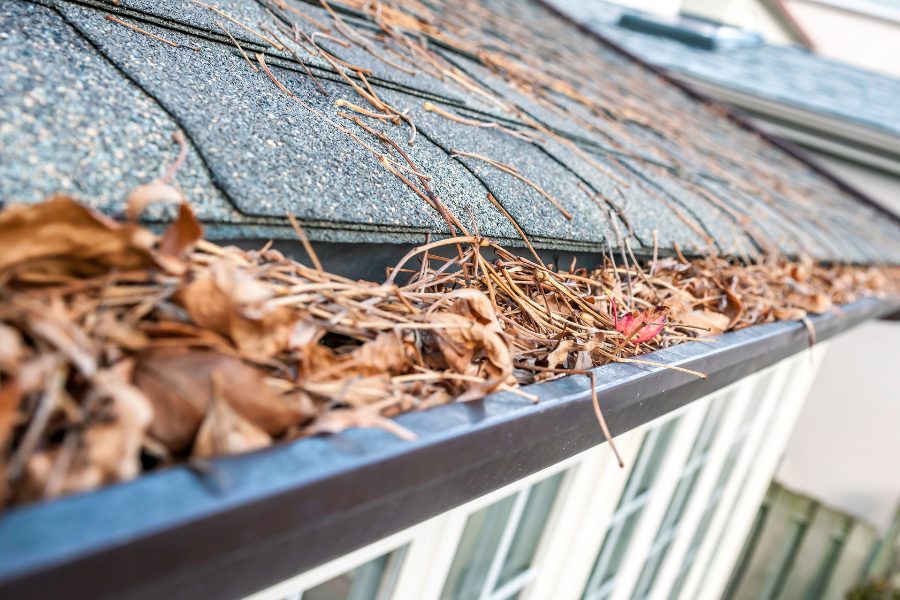
CLOGGED EAVESTROUGH/GUTTERS
Your rain gutters can get clogged with leaves or other debris which can slow or prevent water from properly flowing off the roof. This can cause backed up rainwater to pool in certain areas and over time, soak through the roof.
At first glance, it made be difficult to see if your gutter is clogged with debris. However if you notice a lack of water flowing out of the downspout during a rainstorm, this is likely a sign that you have a clogged gutter.
The best way to remove leaves or debris is to remove it by hand. This will require getting up on a ladder so you can access the gutter. Investing in gutter covers can assist in keeping gutters clear of debris.
We offer Alu-Rex Leaf Guards as part of our eavestrough installation services. If you live in New Brighton or Auburn Bay, perhaps they are not needed… but if you’re in Haysboro, or another inner-city community with ample and established trees, we strongly recommend them (as a plus, you’ll never have to worry about cleaning your eavestrough again!).
BROKEN OR MISSING SHINGLES
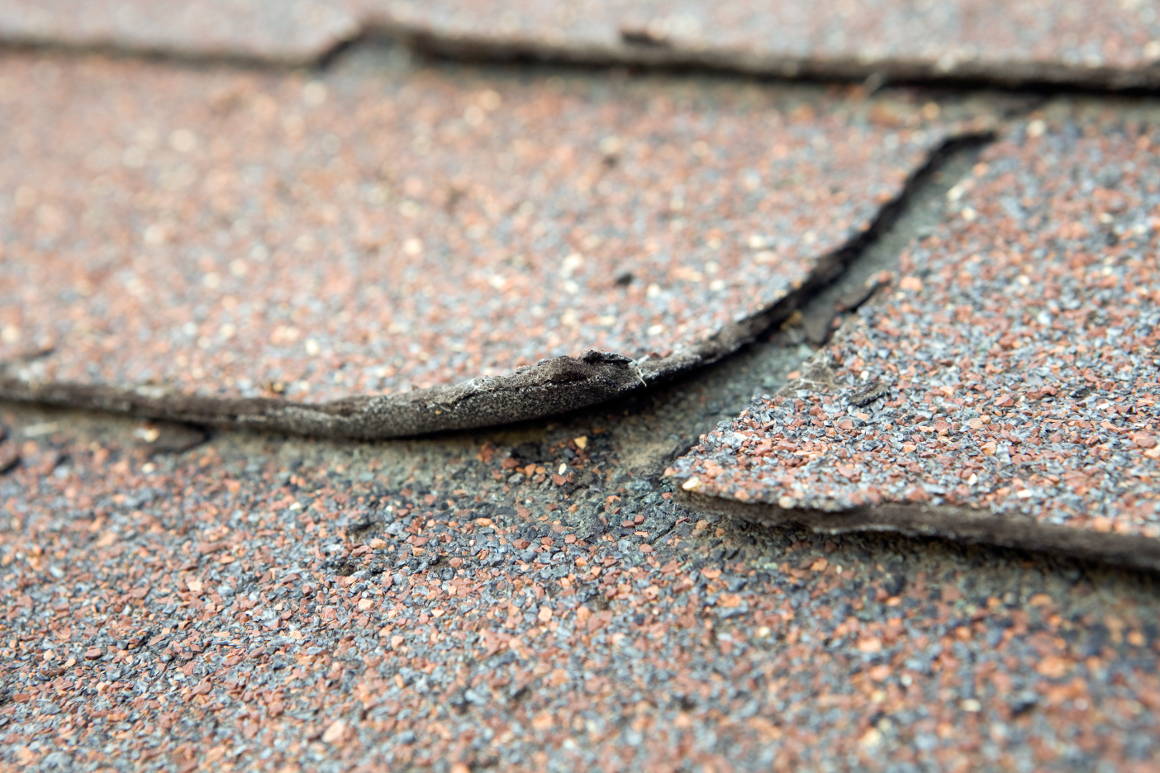
The shingles on your roof can sometimes break or become completely dislodged due to inclement weather such as heavy rain and wind.
If you notice that you that your roof is leaking, one of the first things you should do is check the exterior layer of your roof. Missing shingles should be relatively easy to identify as you will notice different coloured patches on your roof.
To be extra sure, climb a ladder to inspect otherwise hidden areas of your roof for missing or broken shingles. If the weather was very windy recently, you may even notice the shingles littered on the ground around your house.
Give us a call if you’re in need of a roof repair. Our expert roofers will assess your home and provide you our recommended next steps.
CRACKED OR DAMAGED FLASHING
Cracked or Damaged Flashing
Flashing is a thin piece of metal that seals roof transitions to create a water-resistant barrier. They are placed where large amounts of water run off, such as under some shingles and around chimneys, skylights, and where the roof meets a dormer.
Over time, the bonding adhesive used to seal the flashing may corrode. Exposed flashing is more likely to have this happen as they are not covered from weather elements, like wind and rain.
If the source of the leak is determined to be a cracked flashing, it should be replaced immediately. This is relatively easy to do: a new run of flashing in the same pattern as the old one is fastened and then sealed into place.
Ice Dams
We see ice dam damage quite a bit in Alberta, especially during the freeze/thaw cycles we get that are brought on by Chinooks. An ice dam forms when heat escaping from your attic melts snow near the peak of your roof, and that meltwater refreezes as it reaches the colder eaves. The resulting ridge of ice forces water back up under your shingles, where it can seep into the roof deck and eventually into your home.
To fix this in the short term, a roof rake can help remove snow from the lower sections of the roof before it refreezes. Long-term, the real solution is to improve your attic’s insulation and ventilation so that heat stops escaping through the roof in the first place. If you’re seeing ice dams regularly, it’s worth having a professional assess your attic.
Failed Pipe Boots
Most roofs have several plumbing vent pipes that poke through the surface, and each one is sealed with a rubber collar called a pipe boot. Over time, usually around 10 to 15 years, the rubber degrades, cracks, and pulls away from the pipe, creating a gap that lets water run straight into your roof.
Pipe boot failures are an often-overlooked cause of roof leaks because the boots that fit on top of these pipes are small and easy to miss during an inspection, unless you’re looking for them. The fix is straightforward: a replacement boot can be slipped over the existing pipe and sealed in place, usually without replacing any shingles.
Poor Attic Ventilation
A poorly ventilated attic traps heat and moisture, which, over time, cause the roof deck to warp and the shingles above it to deteriorate from the underside out. This kind of damage isn’t always visible from outside until it’s advanced, which makes it particularly costly to ignore.
To find out if your attic suffers from poor ventilation, signs to look for include unusually high heating and cooling bills, frost forming on the underside of the roof deck in winter, and shingles that seem to age faster than expected. The fix involves ensuring a proper balance between intake vents (typically at the soffits) and exhaust vents (at the ridge), so that air moves continuously through the attic.
Aging or Poorly Sealed Skylights
Skylights are a beautiful feature, but they’re also a common source of leaks. The seals around a skylight’s frame can dry out and crack over time, and if the flashing wasn’t installed properly in the first place, even a relatively new skylight can let water in.
To check if your skylight is leaking, take a look at the interior frame after rainfall for any sign of moisture or water staining. From outside, look at the flashing where the skylight meets the roof; it should be tight, sealed, and showing no signs of lifting or corrosion. If the sealant looks cracked or dried out, it can often be reapplied without replacing the whole skylight.
Chimney Issues
A chimney, while great to keep the house toasty, it also has multiple potential failure points, like the flashing at the base, the mortar joints between bricks, the chimney cap, and the caulking around the crown. Any one of these can allow water to enter.
Water staining on the ceiling near your chimney after rainfall is the most obvious sign of a chimney-related leak. From outside, look for crumbling mortar between the bricks, a missing or cracked chimney cap, and flashing that has lifted or separated from the masonry. Most chimney leaks can be resolved with targeted repairs rather than a full rebuild, but they should be addressed quickly because water that gets into masonry and then freezes will accelerate deterioration.
The Bottom Line
Roof leaks rarely announce themselves until they’ve already caused some damage, which is why regular inspection is one of the most valuable things a Calgary homeowner can do. Many of the causes above, from clogged eavestroughs and failed pipe boots to cracked flashing and worn skylight seals, are relatively inexpensive to fix when caught early, but can lead to serious structural damage and mould problems if left unaddressed.If you’ve spotted a leak or noticed any of the warning signs above, give Big 5 a call. We’ve been diagnosing and repairing Calgary roofs since 1984, and we’ll give you an honest assessment of what’s going on and what it will take to fix it.