
Updated April 2026
Summary:
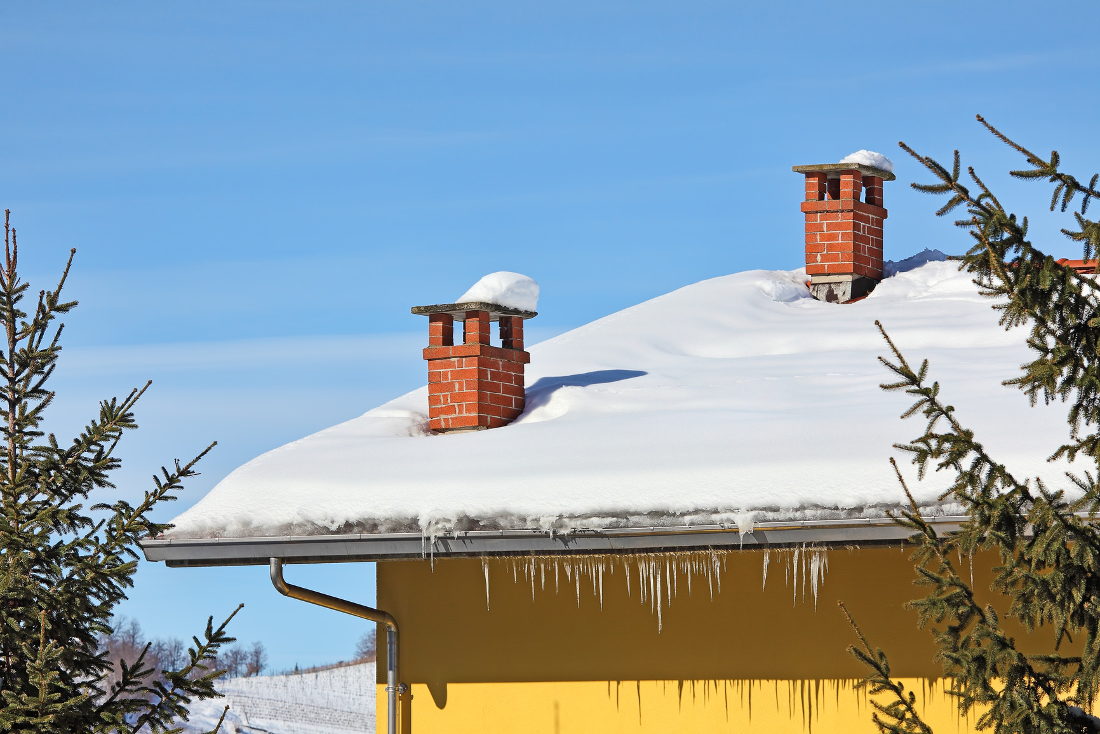
Alberta roofs are built to handle a minimum snow load of 22 pounds per square foot, slightly above the 21 pounds per square foot recommended by the National Research Council of Canada. This accounts for snow drifts over 4 feet high, the equivalent of a 4.5-foot snowdrift or 2.5 feet of compressed snow. That said, sheer snow volume is rarely the biggest concern for Calgary homeowners. Thanks to our freeze/thaw cycles, ice buildup along the eaves tends to pose a greater risk than snowfall alone.
When I was young, I used to sneak out my bedroom window and sit on my roof. My Dad (Al Perzylo, original founder of Big 5) would have been mortified if he knew, but it’s probably part of the reason I wound up getting into the family business.
While on the roof, I used to contemplate things like, “I wonder if I can jump to the house next door,” and “what would happen if I fall?”
One cold November night, and after a particularly heavy snowfall, I wondered, “How much snow can the roof hold before it collapses?” Today’s the day I finally answer that question!
Determining How Much Weight a Roof Can Hold
According to the National Research Council of Canada, the minimum snow load a roof must withstand is 21 pounds per square foot (1 kilopascal). Alberta’s building codes require a minimum of 22 pounds per square foot (or 1.06 kilopascals).
For safety reasons, we build roofs that meet or exceed these codes. We ensure that our eavestroughs and downspouts are properly installed and sloped to facilitate the quick drainage of water and snowmelt.
How Heavy is Snow?
Not all snow is created equal. Fresh, fluffy snow is much lighter than the dense, packed snow that builds up over time. Here’s a simple breakdown:
- 1 foot of freshly fallen snow equals roughly 5 pounds per square inch of load.
- 1 foot of packed or compressed snow equals roughly 20 pounds per square foot, about four times heavier than fresh snow.
- 1 inch of ice equals roughly 5 pounds per square foot of load.
To put that in everyday terms: a 1,500 sq ft roof with just one foot of packed snow on it could be holding around 30,000 lbs, roughly the weight of two full-size pickup trucks.
Alberta’s Building Codes Account for Snow Drifts More Than 4 Feet High
The building codes account for a pretty significant amount of snow buildup before the roof will get stressed. Homes in Calgary are unlikely to receive that much snow, so it’s generally not a worry.
We are more likely to get into trouble with ice buildup because our freeze/thaw cycle (enabled by those Chinooks we enjoy) tends to create it. Unlike snow, ice is extremely dense and heavy, and it doesn’t sublimate or blow away on its own. Ice dams can form along the eaves and add a lot of concentrated weight to the edge of your roof, where it’s most vulnerable.
Should You Clear Snow/Ice From Your Roof?
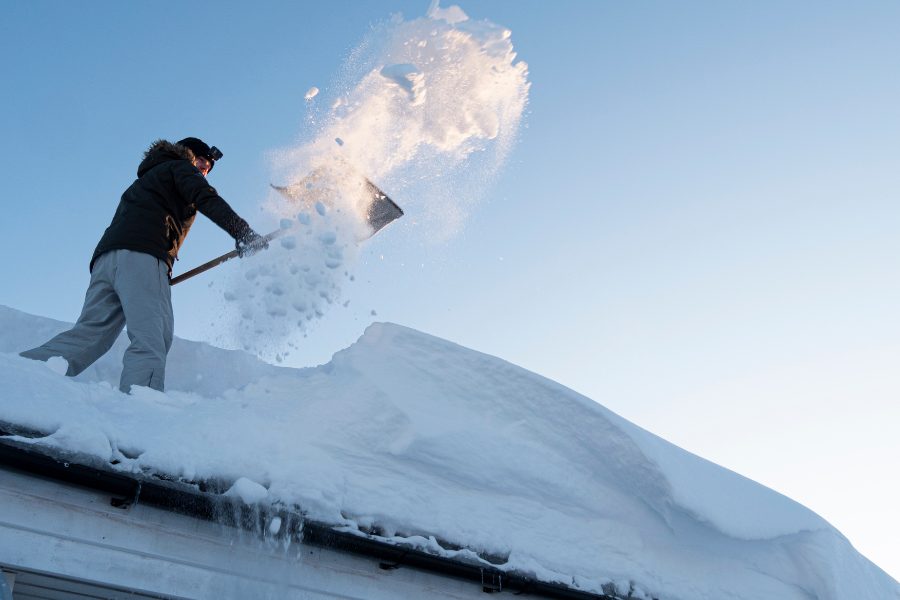
Now knowing that snow is heavy (are you really that surprised?), there’s an obvious question: should you shovel snow off your roof?
See Also: Seasonal Guide: Winter Home Maintenance Checklist (Alberta Edition)
In short, it’s usually not necessary. Calgary rarely accumulates enough snow or ice to stress your roof, as snow generally melts or sublimates before it reaches dangerous weights. Moreover, removing snow can be dangerous for several reasons and should be done only when absolutely necessary.
If you’re specifically concerned about ice dams or heavy buildup near your eaves, that’s often a sign of a ventilation or insulation issue in your attic, and it’s worth having a professional take a look rather than climbing up yourself.
SO HOW MUCH SNOW CAN A ROOF HOLD?
Alberta’s building codes specify that your roof must be able to support loads of at least 22 lbs per square foot.
To see that kind of load, your roof would need to support a snowdrift 4.5 feet high, or 2.5 feet of compressed snow. That’s a lot of snow!The bigger risk for Calgary homeowners isn’t usually snowfall volume; it’s ice. Keep your eavestroughs clear and in good shape so meltwater can drain properly, and you’ll be in good shape through even the nastiest Alberta winters. If you’re overdue for an eavestrough inspection or replacement, give us a call! We’ve been keeping Calgary roofs drainage-ready since 1984.